FIKES UPNVJ - Acute Coronary Syndrome (ACS) is a cardiovascular disease that contributes significantly to global mortality. Global data indicates that deaths due to ACS exceed 8.1 million per year. Research by Yanuarti (2018) reported that 88.2% of ACS patients arrived late to the hospital, with an average delay of 13.77 hours. One of the main factors is a lack of understanding among patients and families about the typical symptoms of a heart attack. Therefore, awareness and recognition of early symptoms are crucial to reducing delays in medical treatment.
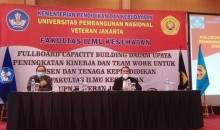
On August 29, 2025, the Community Service Team of the Faculty of Health Sciences (FIKES) of UPN "Veteran" Jakarta held the "NOSKA: Family-Based Early Detection and Prevention of Acute Coronary Syndrome" program at the Community Hall of RW 001/RT 006, Limo Village, Depok City. This activity was chaired by Ms. Diah Tika Anggraeni, S.Kep., M.Kep., with the team consisting of lecturers Ms. The event, led by Dr. Mareta Dea Rosaline, S.Kep., M.Kep., involved four undergraduate nursing students, three D3 nursing students from the Faculty of Health Sciences (FIKES) of UPNVJ, and a guest speaker, Ns. Iwan, from Harapan Kita Heart Hospital.
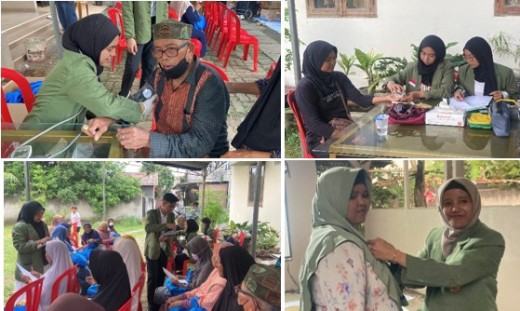
The event was attended by 28 participants and took place from 3:00 PM to 5:30 PM WIB. The series of activities began with registration, blood pressure checks, and blood sugar checks. The event was then opened by the MC, followed by a pre-test, the singing of Indonesia Raya and the National Defense March, and remarks from the head of the community service team and the head of neighborhood association (RT) 006, Mr. Rohman.
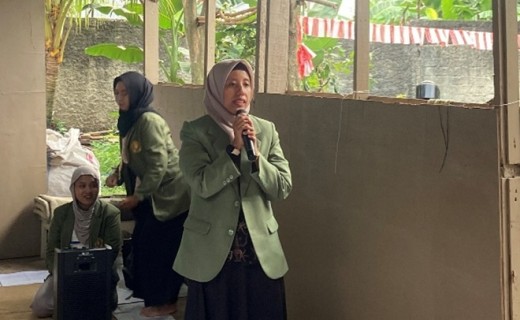
In her remarks, Ns. Diah Tika Anggraeni emphasized that ACS can be life-threatening if patients receive treatment late, thus ensuring the family plays a crucial role in early detection. The head of neighborhood association (RT) 006, Mr. Rohman, also expressed his appreciation for the event and hoped that the materials provided would increase knowledge and encourage healthy lifestyles in the community.
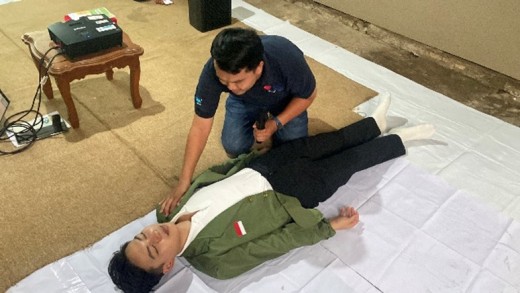
The main material was delivered by a student team, explaining the definition of ACS, its causes, risk factors, complications, and preventive measures that families can take at home. The event continued with a demonstration of early detection skills (checking pulse, checking breathing, and checking consciousness) by a speaker from Harapan Kita Heart Hospital, Ns. Iwan. Participants then practiced directly with the guidance of a student facilitator to ensure they understood the skills.
Before the event concluded, participants completed a post-test to evaluate their knowledge and skills. The event concluded with the symbolic presentation of plaques and pins to representatives of neighborhood association (RT) 006 cadres as a token of appreciation for their cooperation and support. In closing, Ns. Diah Tika Anggraeni reiterated the importance of families' roles in early detection of heart attack symptoms and taking simple initial steps before seeking medical treatment.
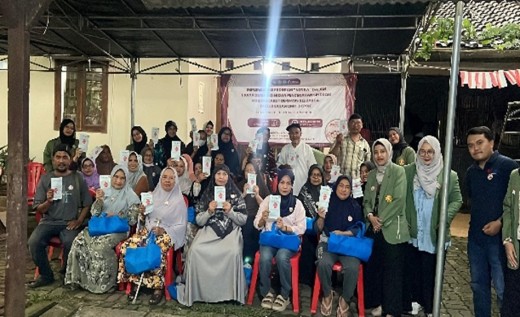
The event proceeded smoothly and enthusiastically, as reflected in the participants' active participation from beginning to end. One resident expressed his impression that, "This activity is very beneficial because it provides real skills for families to detect ACS early at home. S"Through this community service activity, it is hoped that more families will be able to carry out early detection and prevention of heart attacks, so that the number of patients who are late in receiving medical treatment can be reduced. Collaboration between health workers, communities, and families will be a real step in reducing the incidence of ACS in the community.